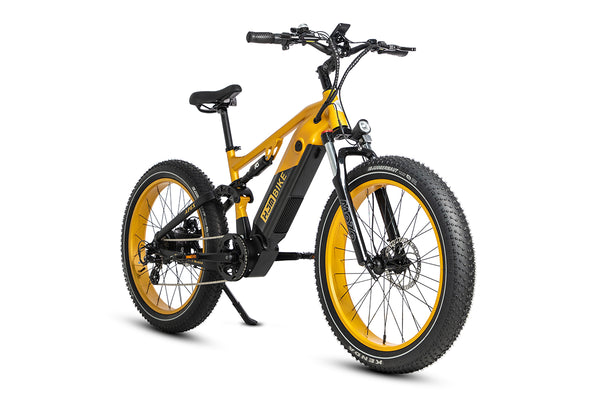
eBike Disc Brake Care: Pads, Rotors and When to Get Service
eBike disc brake maintenance starts with identifying the brake system fitted to your bike. Check operation, protect pads and rotors from contamination, and follow the exact manufacturer’s inspection and wear limits.
HJM configurations can differ. Do not apply one brake pad, rotor specification or adjustment procedure to every eBike.
Identify the brake system first
Mechanical disc brakes use a cable to operate the caliper. Hydraulic disc brakes use fluid pressure through a hose.
Identify the brake brand and model before ordering parts or attempting adjustments. Record markings on the caliper, lever and rotor where available.
For TEKTRO equipment, use the official instructions and compatibility information for the specific system. The brand name alone does not establish which replacement fits.
If the identification is unclear, send HJM photographs before buying a part.
Check brake operation before riding
Follow your eBike’s pre-ride procedure and confirm that the brakes operate normally.
Notice changes from the previous ride, including:
- A lever moving much farther than usual.
- Reduced or unreliable stopping.
- Visible fluid leakage on a hydraulic system.
- New or persistent rubbing.
- An unusual noise or change in braking feel.
A stationary check is useful, but it does not prove that a brake with a known problem is ready for normal riding.
If braking is unreliable, stop using the bike until the cause has been assessed and resolved.
What do common disc brake symptoms mean?
A symptom can have more than one cause. Use these observations to decide what to check or report, rather than treating them as a diagnosis.
| What you notice | What to do next |
|---|---|
| New squealing or another unusual noise | Note when it occurs and whether braking has changed; do not assume cleaning alone will resolve it |
| Persistent rotor rubbing | Arrange an inspection for the cause; do not bend the rotor or change adjustments at random |
| Weak or inconsistent braking | Stop riding and have the system assessed |
| A lever travelling unusually far | Have the brake checked before riding again; do not assume all systems use the same adjustment |
| Visible hydraulic fluid leakage | Stop riding and arrange service |
| Suspected oil or lubricant on pads or rotors | Follow the brake manufacturer’s guidance and have affected parts assessed |
Report whether the issue began after transport, wheel removal, cleaning, a fall or recent service. That context can help with the inspection.
Brake pads and rotors have specific wear limits
Use the measurement method and limit specified for your brake model.
Some pad instructions refer to total thickness including the backing plate. Other specifications refer to a particular wear surface. A number is not useful unless you know exactly what is being measured.
Rotors also have model-specific minimum thicknesses and other inspection requirements. Check any markings and the applicable documentation.
Do not transfer a wear limit from another brake system. If you cannot identify the correct specification or measure it reliably, ask a qualified mechanic to inspect it.
Keep braking surfaces free of contamination
Protect pads and rotors when cleaning the eBike or lubricating the drivetrain. Keep oils, lubricant and unsuitable cleaning products away from braking surfaces.
Allow hot components to cool before inspection. Avoid touching braking surfaces unnecessarily.
Use only the cleaning procedure permitted by the brake manufacturer. Do not assume a contaminated pad can be restored by washing, heating or sanding.
The right action may include replacing affected parts, depending on the system and condition.
What can an owner check?
Owners can look for visible damage, leakage and changes in operation, and keep a record of symptoms.
Adjustments, measurements and repairs require the correct instructions and tools. Do not tighten components by feel or copy a repair procedure from a different brake model.
Hydraulic bleeding, uncertain compatibility, suspected contamination and unreliable braking should be handled with the appropriate expertise.
If you are unsure, stop at inspection and arrange service.
What information is needed for replacement brake parts?
Provide the following before ordering:
| Information | Why it helps |
|---|---|
| HJM eBike model and known configuration | Narrows down the fitted equipment |
| Brake brand and model markings | Helps identify the exact system |
| Clear caliper and lever photographs | Helps confirm component identification |
| Pad or rotor markings, where available | Provides additional replacement information |
| Description of the problem | Helps establish whether inspection is needed before ordering |
Pad shape alone may not establish compatibility. Rotor diameter alone is also not enough to approve a replacement.
Do not assume that a similar-looking lever, pad or rotor is interchangeable. Confirm the complete specification and approved pairing.
After brake service: complete the required checks
Replacement, adjustment and any bedding-in procedure depend on the brake system and components.
Follow the applicable instructions and have braking operation confirmed before returning to normal riding. New parts do not automatically mean the system is ready without these checks.
If rubbing, unusual lever feel or weak braking remains after service, have the issue reassessed.
Does brake squeal mean the pads are worn out?
Not necessarily. Noise can have several causes and does not establish pad condition on its own.
Check the applicable inspection requirements and report any change in stopping performance. Do not replace a proper assessment with a diagnosis based only on sound.
Can all eBike brake pads use the same replacement?
No. Identify the brake model and confirm the approved pad specification. Even parts sold for the same brand may serve different systems.
Should you ride if a disc brake keeps rubbing?
Persistent rubbing needs assessment. Do not assume it is harmless or try to conceal it with random adjustments.
If it occurs with reduced braking, damage or another significant change, stop riding and arrange service before continuing.
For model-specific help, consult your owner’s manual or contact HJM with the brake identification and photographs.