

Winter Electric Trike Care: Battery, Cleaning and Storage
Looking after an electric trike in winter starts before the next ride. Colder temperatures can affect battery performance, while moisture, road salt and long periods of storage create different care needs. Whether you ride regularly or put your TriHauler away for the season, use the instructions supplied with your particular trike and battery.

Check the battery instructions first
Charging, riding and storage can have different permitted temperature ranges. Check the battery label and matching manual rather than using one temperature rule for every model.
Do not charge a battery that is outside its permitted charging range. After bringing it in from the cold, allow it to reach an appropriate temperature naturally and make sure the charging port and contacts are dry. Keep it away from heaters and other direct heat sources.
Use the approved charger in a dry, ventilated indoor location, clear of exits and combustible materials. Stay nearby and awake while charging. For a dual-battery configuration, follow the exact instructions for isolating and charging the packs.
Remove moisture and road salt
After exposure to wet or salted roads, switch off the trike and disconnect charging equipment before cleaning. Use a damp cloth and an appropriate mild cleaner, following the manual. Pay attention to the rear fenders, basket supports and areas around both rear wheels where dirt can collect.
Keep water and cleaning products away from electrical connections and braking surfaces. Do not pressure wash or spray motors, connectors or bearings. Dry the trike thoroughly before reconnecting equipment or putting it away.
Check all three tires and the brakes
Inspect each tire for damage and check pressure with a gauge against the instructions for the fitted tires and configuration. Check for anything caught around the wheels, chains or brakes.
Before riding, confirm that the brakes and parking locks work as instructed. Arrange service if a brake feels different, a wheel does not move normally or anything appears loose or damaged.
Fat tires and three wheels do not make icy or snowy surfaces automatically suitable for riding. If conditions are slippery or outside your ability or the trike's intended use, leave the trip for another day.
Plan for seasonal storage
Store the trike and batteries in a dry, protected location within their specified temperature limits. Follow the battery's storage charge requirement and inspection schedule. Do not leave a depleted battery unattended through the winter or assume it needs no checks until spring.
Check again before your first ride back
Inspect the tires, brakes, lighting, wiring and battery mounts. Make sure stored items have not damaged or obstructed the trike. Start with an unloaded check in a clear, level area, and contact HJM if anything behaves differently from normal.
Explore Electric Trikes
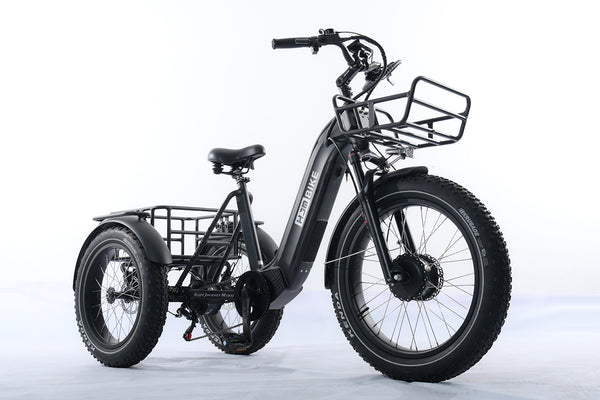
TriHauler Terra T5
Reverse + Cruise
Explore Electric Trikes →Compare TriHauler Models →


