

Your First TriHauler Ride: Setup, Controls and a Pre-Ride Checklist
Your first TriHauler electric trike ride should be short, familiar and easy to stop. Check the setup, adjust your riding position and learn the controls in a clear, level area before joining traffic. Use the instructions for your exact model because displays, brakes and available functions can differ.
Check the setup before switching on
Follow the delivery and assembly instructions supplied with your trike. Confirm that the wheels, steering components, saddle and pedals are secure, the brakes operate correctly and the battery is locked in place.
Set tire pressure within the specified limits for your trike and tires. Resolve loose parts, rubbing, damage or unusual movement before riding. Have a qualified technician complete work that is beyond your experience.
Adjust the fit and identify the controls
You should be able to reach the handlebars and brake levers comfortably and get on and off with control. Respect minimum insertion marks and tightening instructions when adjusting the saddle or handlebar.
Locate the power switch, assist settings, lights and throttle, where fitted. Identify which brake lever operates each brake. Learn the parking-brake procedure if your configuration includes one.
Some functions are model-specific. For example, reverse and cruise controls should only be used on a model equipped with them and according to its manual.
Practice starts, stops and wide turns
Wear a properly fitted helmet and begin in a traffic-free, level space.
- Select the lowest appropriate assistance setting.
- Practice gentle starts and controlled straight-line stops.
- Slow down before turning and use smooth steering inputs.
- Leave space for both rear wheels when passing an obstacle.
- Stop before looking down to adjust unfamiliar controls.
An electric trike handles differently from a two-wheel bicycle. Three-wheel support can make stationary stops more convenient, but it does not remove tipping risk. Avoid abrupt turns, side slopes and unfamiliar uneven surfaces while learning.
Add cargo after you are comfortable
Begin without unnecessary cargo. When you add a load, secure it low and evenly and follow the total payload and individual rack or basket limits.
A loaded trike may respond differently when starting, braking and turning. Repeat your practice in a clear area before taking the load onto your normal route.
Your quick departure checklist
Before each ride, check:
- Tires, brakes and steering.
- Battery attachment and available charge.
- Lights and visibility.
- Secure cargo and clear moving parts.
- Route width, surfaces and a manageable return distance.
Power off before making adjustments or handling an active throttle area.
What should your first route look like?
Choose a short, level route with room to turn around and stop. Leave hills, narrow paths and busy crossings until the controls and handling feel familiar.
For assembly questions, unusual sounds or uncertain brake operation, contact HJM Support before continuing. Keep your model information available so the team can give relevant guidance.
Explore Electric Trikes
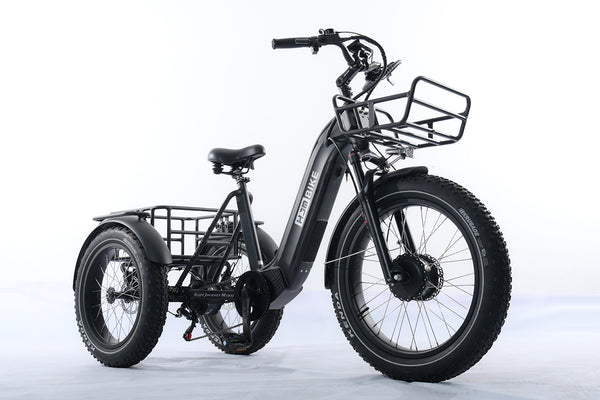
TriHauler Terra T5
Reverse + Cruise
Explore Electric Trikes →Compare TriHauler Models →


