

Electric Trike vs. Electric Bike: Which Fits Your Everyday Rides?
Choose an electric trike when three-wheel support at stops and useful carrying space fit your routine. Choose an electric bike when a narrower footprint and familiar two-wheel handling matter more. Neither layout is automatically right for every rider: fit, storage and the route you actually ride should guide the choice.

What changes when you add a third wheel?
Both types combine pedals, a battery and motor assistance. An electric trike has a wider rear footprint and supports itself on three wheels when stationary on suitable ground. An eBike has two wheels and requires the rider to manage balance when riding and stopping.
The trike's support can be appealing for unhurried errands and repeated stops. It also changes cornering: slow down before turns, leave room for the rear wheels and approach cross-slopes carefully. Three wheels do not eliminate tipping risk.
Compare the layout against your routine
- Frequent stops: consider whether three-wheel support makes mounting, parking and starting feel more manageable.
- Narrow access: compare the complete vehicle width with gates, paths and storage entrances.
- Carrying items: compare basket or rack limits, available space and the total payload rating.
- Transport: check vehicle openings, loading equipment and weight before assuming either type is easy to carry.
A two-wheel bike can carry shopping in compatible racks or panniers. A cargo electric trike may offer a more convenient basket arrangement. Compare actual capacity and how you will secure your items rather than assuming wheel count alone determines what you can carry.
Which is more comfortable?
Comfort comes from fit and equipment as well as layout. Compare saddle position, handlebar reach, mounting height, tires and the way assistance starts. An upright posture or a step-through frame may help some riders feel at ease, but these features exist on both bikes and trikes.
Try mounting, reaching both brake levers and stopping in a controlled area when possible. Height recommendations are a starting point, not a replacement for checking reach and seat adjustment.
What about gravel and other mixed surfaces?
Fat tires can be useful on suitable mixed surfaces, but tire size does not make every trail appropriate. Check traction, width, slopes and route permission. A rough or cambered section that feels manageable on a bicycle can demand a different approach on a trike.
How should you decide?
Write down one normal trip: where you start, what you carry, where you stop and how you park. Measure your access points and compare the selected models against that trip. If a trike interests you, read the electric tricycle buying guide for a fuller checklist.
Browse TriHauler electric trikes and HJM electric bikes to compare current fit, equipment and carrying options. Choose the layout that makes your own outings easier and more enjoyable.
Explore Electric Trikes
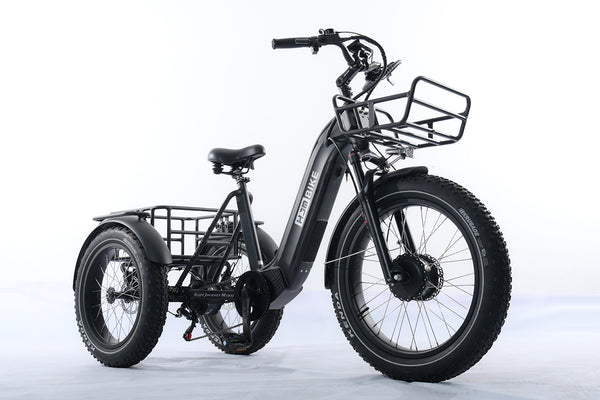
TriHauler Terra T5
Reverse + Cruise
Explore Electric Trikes →Compare TriHauler Models →


